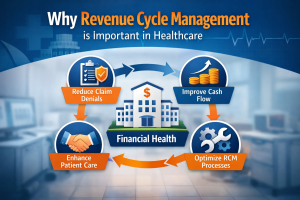
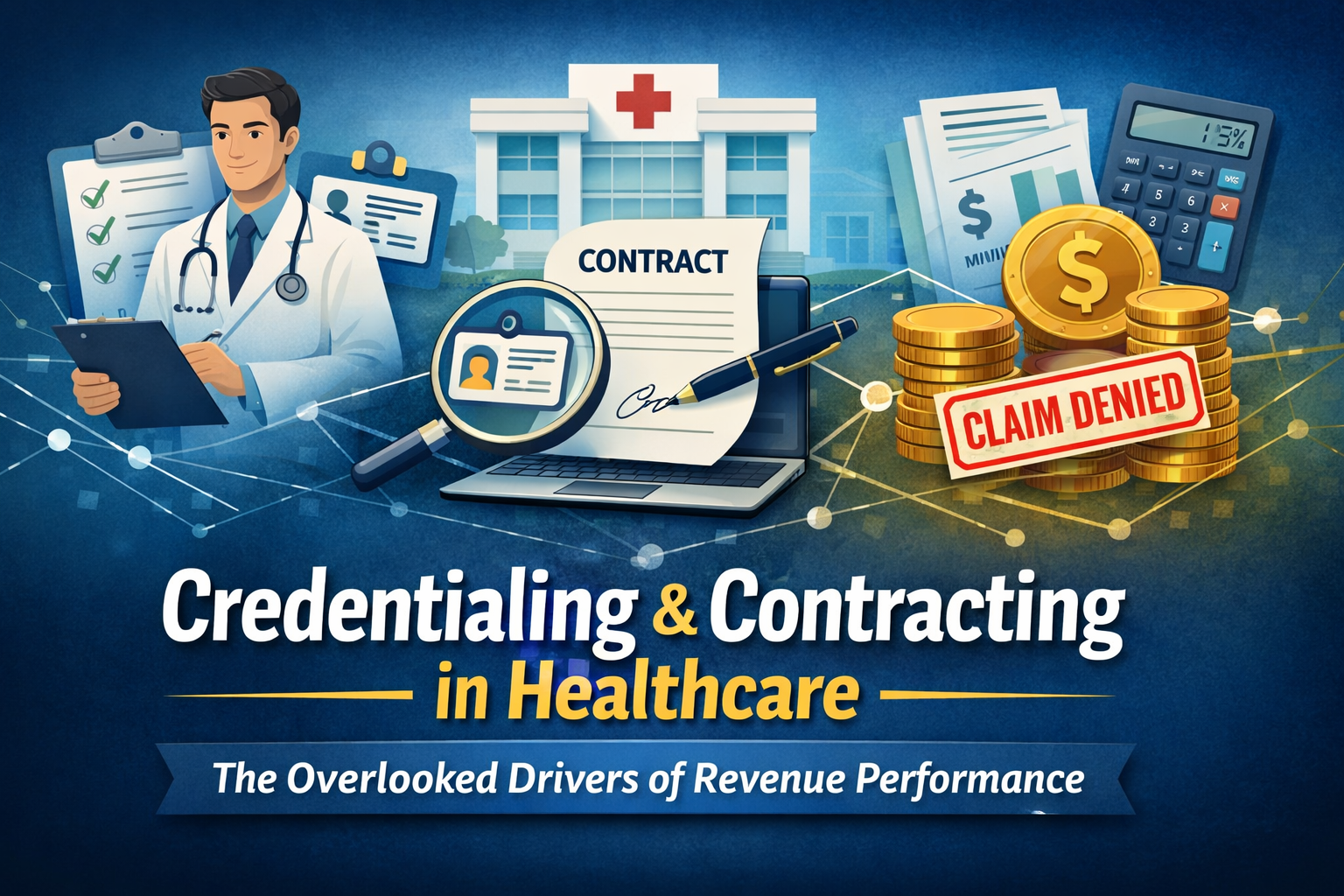
Credentialing and Contracting in healthcare are the foundation of revenue performance, they determine whether providers can bill insurance and how much they get paid. These are not administrative tasks; they are direct revenue drivers. When Credentialing and Contracting processes are delayed, misaligned, or improperly managed, healthcare organizations experience denials, underpayments, and permanent revenue loss that billing alone cannot fix.
In simple terms, if providers are not properly credentialed or contracts are outdated, incomplete, or incorrectly loaded, revenue is lost before billing even begins. Aligning credentialing, contracting, and contract loading improves reimbursement accuracy, reduces denials, and strengthens overall financial performance.
When healthcare organizations evaluate their financial performance, the conversation often centers around billing efficiency, claim denials, and collections. While these are important components of revenue performance, they represent only the final stages of how revenue is realized.
In reality, healthcare revenue begins long before a claim is submitted.
Before a service can be billed, before reimbursement can be calculated, and before revenue cycle processes can operate, healthcare organizations must first establish payer access and define how reimbursement will occur. These foundational elements are determined through credentialing and contracting.
Credentialing determines whether a provider is eligible to bill an insurance payer.
Contracting determines how much the provider will be paid for services delivered.
Contract loading determines whether those agreed-upon terms are actually implemented and enforced within both provider and payer systems.
Together, these three components form the foundation of healthcare revenue performance.
In many cases, revenue challenges that appear to be billing issues are not caused by billing inefficiencies at all. Instead, they originate from gaps, delays, or misalignment in credentialing, contracting, or contract implementation.
Without a strong foundation in these areas, even the most efficient revenue cycle processes cannot fully recover lost revenue.
What is Credentialing in Healthcare?
Credentialing is the process through which healthcare providers are verified and approved to participate in insurance networks.
This process involves validating a provider’s:
- Professional education and training
- Licensure and certifications
- Employment history
- Malpractice history
- Professional standing
Insurance companies use credentialing to determine whether a provider meets their standards to deliver care to their members.
Once credentialed, a provider is recognized as participating in the payer’s network and is eligible to submit claims for reimbursement.
Why Credentialing Is a Direct Driver of Revenue
Credentialing is often viewed as an administrative requirement. In reality, it is one of the most critical determinants of whether revenue can be generated at all.
If credentialing is not properly completed:
- Claims may be rejected outright
- Services may be processed as out-of-network
- Reimbursement may be significantly reduced
- Providers may not be able to bill at all
A common real-world scenario occurs when a new provider joins a practice and begins seeing patients before credentialing is finalized. From an operational standpoint, everything appears to be functioning normally:
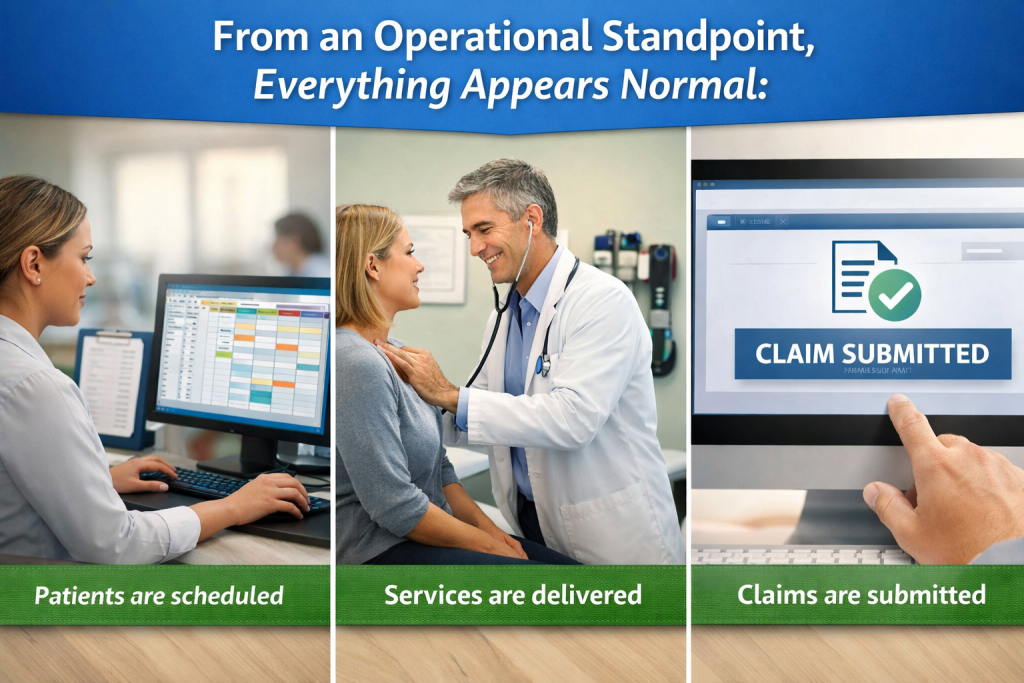
However, weeks later, those claims are denied because the provider was not credentialed at the time of service.
In many cases, these claims cannot be retroactively reimbursed. This results in permanent revenue loss, not simply delayed payment.
Operational Failures in Credentialing
Credentialing failures are rarely isolated events. They often reflect systemic issues in how practices manage payer relationships.
Credentialing Delays and Revenue Lag
Credentialing timelines can extend from sixty to one hundred twenty days or longer.
During this time, providers may be:
- Unable to bill
- Reimbursed as out-of-network
- Limited in the patients they can see
If patient scheduling is not aligned with credentialing timelines, practices may generate clinical activity without generating revenue.
Credentialing Visibility Gaps
Many organizations lack centralized tracking for credentialing status.
This creates situations where:
- Providers believe they are credentialed when they are not
- Billing teams assume eligibility that does not exist
- Claims are submitted without payer alignment
Without visibility, credentialing becomes reactive rather than controlled.
Re-Credentialing Failures
Payers require periodic re-credentialing.
Failure to maintain credentialing can result in:
- Removal from payer networks
- Claim denials due to inactive status
- Disruption in reimbursement
These issues often occur without immediate detection.
What Is Contracting in Healthcare?
Once a provider is credentialed, the next step is establishing a payer contract. Contracting defines the financial relationship between the provider and the payer.
Payer contracts specify:
- Reimbursement rates
- Covered services
- Billing rules
- Authorization requirements
- Payment methodologies
Contracting determines not only whether revenue can be generated, but how much revenue is generated per service.
Why Contracting Is One of the Most Powerful Revenue Levers
Many healthcare organizations focus on increasing patient volume while overlooking the impact of reimbursement rates.
However, revenue is not only a function of volume, it is also a function of payment per encounter.
For example: Two practices may see the same number of patients and deliver identical services.
If one practice is reimbursed at higher rates due to stronger contracts, it will generate significantly more revenue without increasing volume.
Real-World Contracting Failures
Outdated Contracts
Practices often operate under contracts that have not been reviewed in years. As reimbursement benchmarks evolve, these contracts may fall below market rates.
This creates a situation where:
- Services are delivered correctly
- Claims are paid
- But revenue is consistently lower than it should be
Misaligned Service Coverage
A practice may expand services without updating payer contracts.
This results in:
- Services being non-covered
- Claims being denied
- Lost revenue for billable services
Lack of Contract Awareness
Many organizations do not fully understand:
- What their contracts include
- How reimbursement is calculated
- Which services are covered
Without this awareness, practices cannot identify underperformance.
Contract Loading: Turning Agreements Into Operational Reality
Contracting alone does not ensure proper reimbursement. Once a contract is executed, it must be translated into operational systems through contract loading.
Contract loading is the process of entering contract terms into:
- Practice management systems
- Billing platforms
- Financial systems
This includes:
- Fee schedules
- Reimbursement methodologies
- Billing rules
- Modifier logic
- Bundling rules
Without contract loading, contracts exist only as documents—not as enforceable financial controls.
Provider-Side Contract Loading: Establishing Internal Financial Control
On the provider side, contract loading enables organizations to:
- Calculate expected reimbursement
- Validate payer payments
- Detect underpayments
- Forecast revenue
Without this, practices rely entirely on payer calculations. This creates a reactive model where revenue is accepted rather than verified.
Payer-Side Contract Loading: The Hidden Source of Revenue Risk
On the payer side, contracts are independently configured within claims adjudication systems.
This process includes:
- Entering fee schedules
- Defining coverage rules
- Setting authorization logic
- Assigning network status
If errors occur during this process, claims may be:
- Underpaid
- Denied incorrectly
- Processed under incorrect terms
Importantly, these issues occur even when the provider has done everything correctly.
The Alignment Gap: Where Revenue Is Lost
Revenue loss often occurs in the gap between:
- What was contracted
- What was loaded by the provider
- What was configured by the payer
- What was actually reimbursed
If these elements are not aligned, revenue leakage occurs.
Why Contract Loading Failures Go Undetected
Contract loading issues are difficult to identify because:
- Providers lack visibility into payer systems
- Payment explanations are often unclear
- Underpayments appear “normal”
- Discrepancies accumulate gradually
As a result, practices may lose revenue without realizing it.
Where Revenue Cycle Management Fits In
Once credentialing, contracting, and contract loading are aligned, Revenue Cycle Management ensures execution.
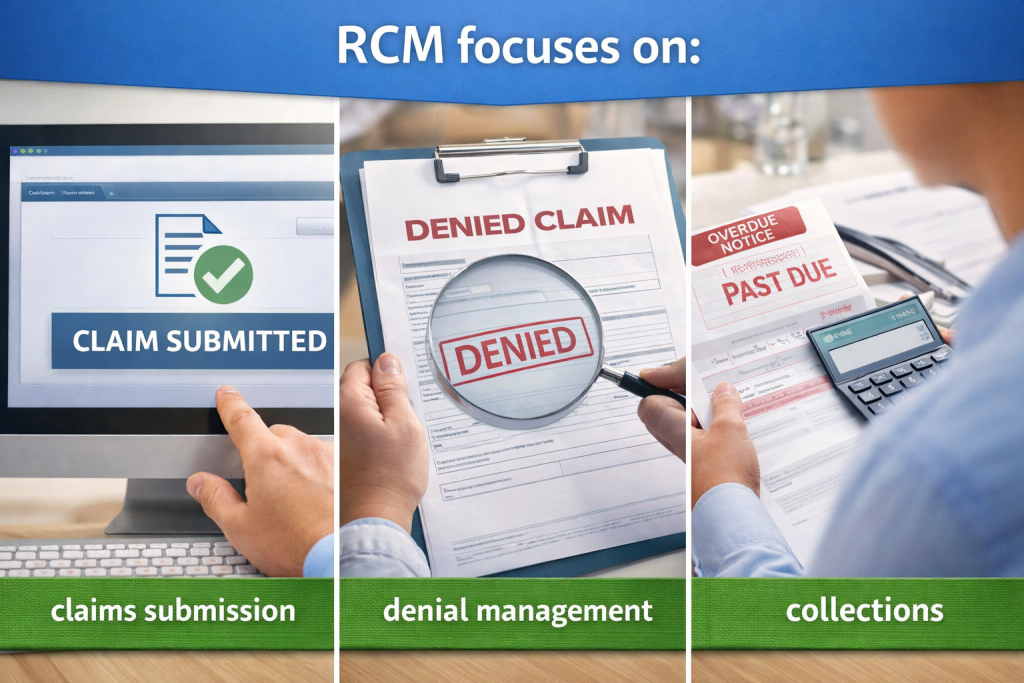
However, RCM operates within the structure created by credentialing and contracting. If that structure is flawed, billing cannot fully compensate. For a deeper discussion, refer to: Revenue Cycle Management in Healthcare
Key Takeaways
- Credentialing and Contracting are primary drivers of healthcare revenue
- Revenue loss often originates before billing, not within it
- Credentialing delays can lead to non-billable services and permanent losses
- Poor contracting results in lower reimbursement despite same patient volume
- Contract loading errors create hidden underpayments and denials
- Revenue Cycle Management cannot fix upstream issues
- Alignment across credentialing, contracting, and payer systems is critical
Final Thoughts
Credentialing, contracting, and contract loading are not administrative tasks. They are foundational drivers of revenue performance.
They determine:
- Whether revenue can be generated
- How much revenue is earned
- Whether revenue is accurately realized
Healthcare organizations that strengthen these areas are better positioned to improve reimbursement, reduce denials, and increase financial stability.
Get started with our Credentialing and Contracting services →
Evaluating Your Practice’s Payer Alignment
If your organization is experiencing inconsistent reimbursement, unexpected denials, or revenue performance that does not reflect the services you provide, it may be time to evaluate your credentialing and contracting strategy.
L&C Advanced Practice Management works with healthcare organizations to identify gaps, improve payer alignment, and strengthen the systems that support revenue performance.
To learn more, schedule a consultation with our team.
FAQ: Credentialing and Contracting in Healthcare
Credentialing verifies a provider’s qualifications and eligibility to work with insurance payers, while contracting defines reimbursement rates, coverage, and payment terms.
They determine whether providers can bill and how much they get paid, making them foundational to revenue performance and financial stability.
L&C Advanced Practice Management helps healthcare organizations streamline and manage Credentialing and Contracting by ensuring providers are enrolled with payers accurately and on time, contracts are properly structured and aligned with payer requirements, and contract terms are correctly implemented into operational systems. We help identify gaps in payer alignment, reduce delays in credentialing, optimize reimbursement through better contracting strategies, and ensure contract loading accuracy—so organizations can reduce revenue leakage, minimize denials, and improve overall financial performance.